

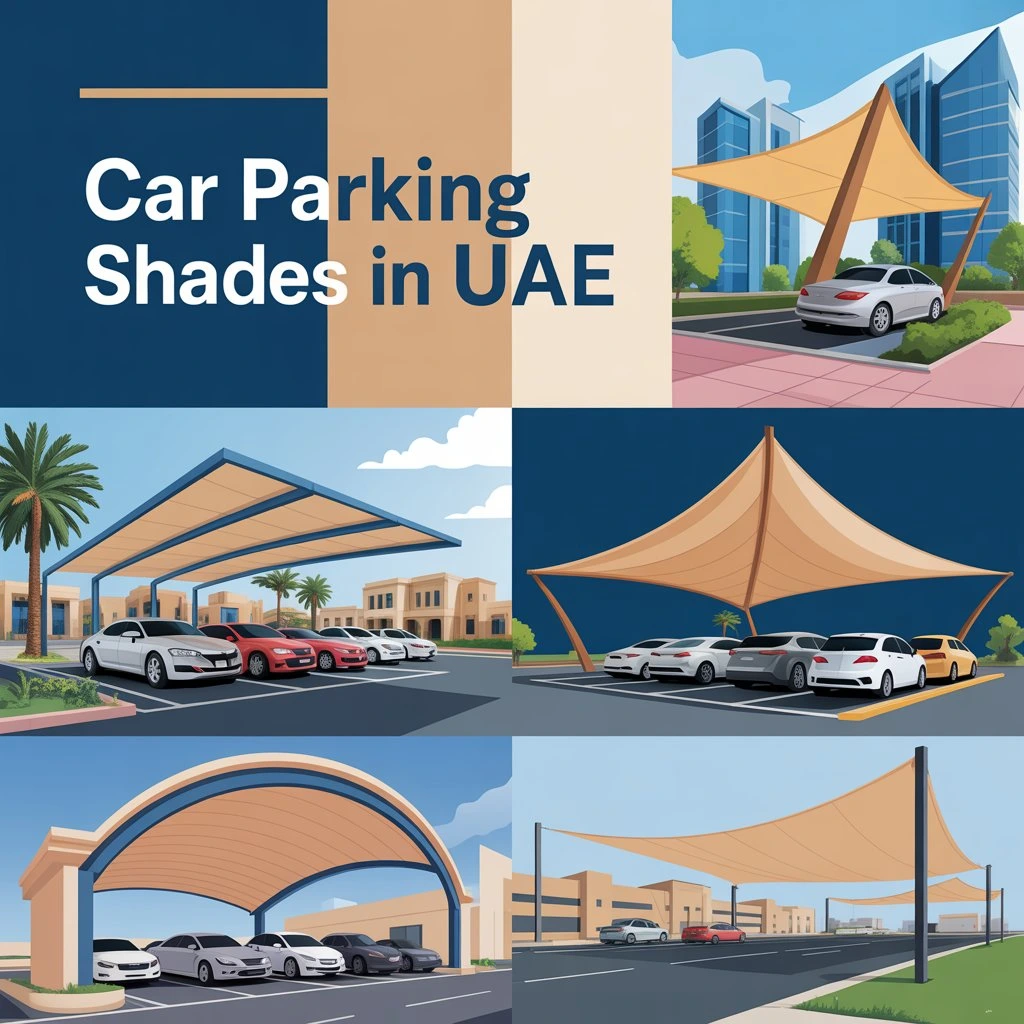
Car parking shades in UAE have become essential for protecting vehicles from extreme sunlight, heat, and harsh weather conditions. Whether for residential villas, commercial buildings, malls, or industrial facilities, installing high-quality parking shades improves comfort, durability, and vehicle protection.
This guide explains the different types of car parking shades, materials used, and important factors to consider before installation.
Why Car Parking Shades are Important in UAE
The UAE climate exposes vehicles to intense UV rays and high temperatures throughout the year. Without proper protection, vehicles may experience:
- Interior heat buildup
- Paint fading and damage
- Dashboard cracking
- Reduced vehicle lifespan
Installing parking shades helps maintain cooler temperatures and protects vehicles from long-term damage.
Types of Car Parking Shades
Cantilever Parking Shades
Cantilever shades are modern structures designed without center support columns, providing maximum parking space utilization.
Best for:
- Commercial parking
- Villas
- Office buildings
Pyramid Parking Shades
Pyramid-style parking shades are widely used in residential and commercial spaces due to their attractive appearance and durability.
Best for:
- Villas
- Hotels
- Outdoor parking areas
Arch Parking Shades
Arch parking shades provide stylish curved designs with strong structural support.
Best for:
- Large parking areas
- Commercial facilities
- Industrial spaces
Sail Parking Shades
Sail shades offer modern aesthetics and are ideal for outdoor seating and decorative parking areas.
Materials Used in Car Parking Shades
PVC Parking Shades
PVC fabric provides:
- Waterproof protection
- High durability
- UV resistance
- Long lifespan
For durable outdoor protection, explore our PVC tarpaulin solutions in Dubai
HDPE Parking Shades
HDPE material offers:
- Better airflow
- Heat reduction
- UV protection
- Lightweight performance
We also provide high-quality shade net solutions in UAE for outdoor applications.
PVDF Parking Shades
PVDF materials are premium-grade fabrics designed for long-term durability and weather resistance.
Benefits of Car Parking Shades
Installing parking shades offers multiple benefits:
- Protection from UV rays
- Lower vehicle temperature
- Improved vehicle lifespan
- Enhanced outdoor aesthetics
- Reduced maintenance costs
Car Parking Shade Installation Process
Professional installation usually includes:
Site Inspection
Analyzing parking area dimensions and requirements.
Material Selection
Choosing suitable PVC, HDPE, or PVDF fabric.
Structural Design
Preparing custom framework and technical drawings.
Installation
Professional fitting for maximum durability and safety.
You can also explore our car parking shade installation solutions in Dubai
How to Choose the Right Parking Shade
Before installation, consider:
- Parking area size
- Material durability
- UV resistance
- Design style
- Wind resistance
- Budget and maintenance
Applications of Car Parking Shades
Parking shades are widely used for:
- Residential villas
- Commercial buildings
- Shopping malls
- Warehouses
- Industrial facilities
- Schools and hospitals
For additional outdoor protection, you can also check our sun shade solutions in Dubai
Conclusion
Car parking shades in UAE are a practical and long-term solution for vehicle protection and outdoor comfort. Choosing the right material and professional installation ensures durability, performance, and better protection against harsh weather conditions.
FAQ – Frequently Asked Questions
Q1. What is the best material for car parking shades?
Ans – PVC, HDPE, and PVDF are the most commonly used materials due to their durability, UV resistance, and weather protection.
Q2. How long do car parking shades last in UAE?
Ans – High-quality parking shades can last between 8 to 15 years depending on the material and maintenance.
Q3. Are parking shades waterproof?
Ans – Yes, PVC and PVDF parking shades provide excellent waterproof protection.
Q4. Can parking shades be customized?
Ans – Yes, parking shades can be customized based on size, design, color, and application requirements.