
Choosing the right shade net percentage is important when you need effective protection from intense sunlight, heat, and outdoor exposure in the UAE. Shade nets are available in different shade percentages, and each option allows a different amount of sunlight to pass through the fabric.
A 30% shade net, for example, provides relatively light shading, while a 90% shade net creates a much denser shaded environment. The right choice depends on the application, type of plants or materials being protected, required sunlight levels, and the location where the net will be installed.
In the UAE, shade nets are widely used for agriculture, nurseries, landscaping, construction sites, parking areas, greenhouses, and general outdoor protection. Understanding the difference between 30%, 50%, 75%, and 90% shade nets can help you select a solution that provides the right balance between sunlight reduction, ventilation, and protection.
This guide explains how shade percentages work and which shade net may be suitable for different applications in UAE conditions.
What Does Shade Net Percentage Mean?
The shade percentage indicates approximately how much sunlight the shade net is designed to block or reduce.
For example:
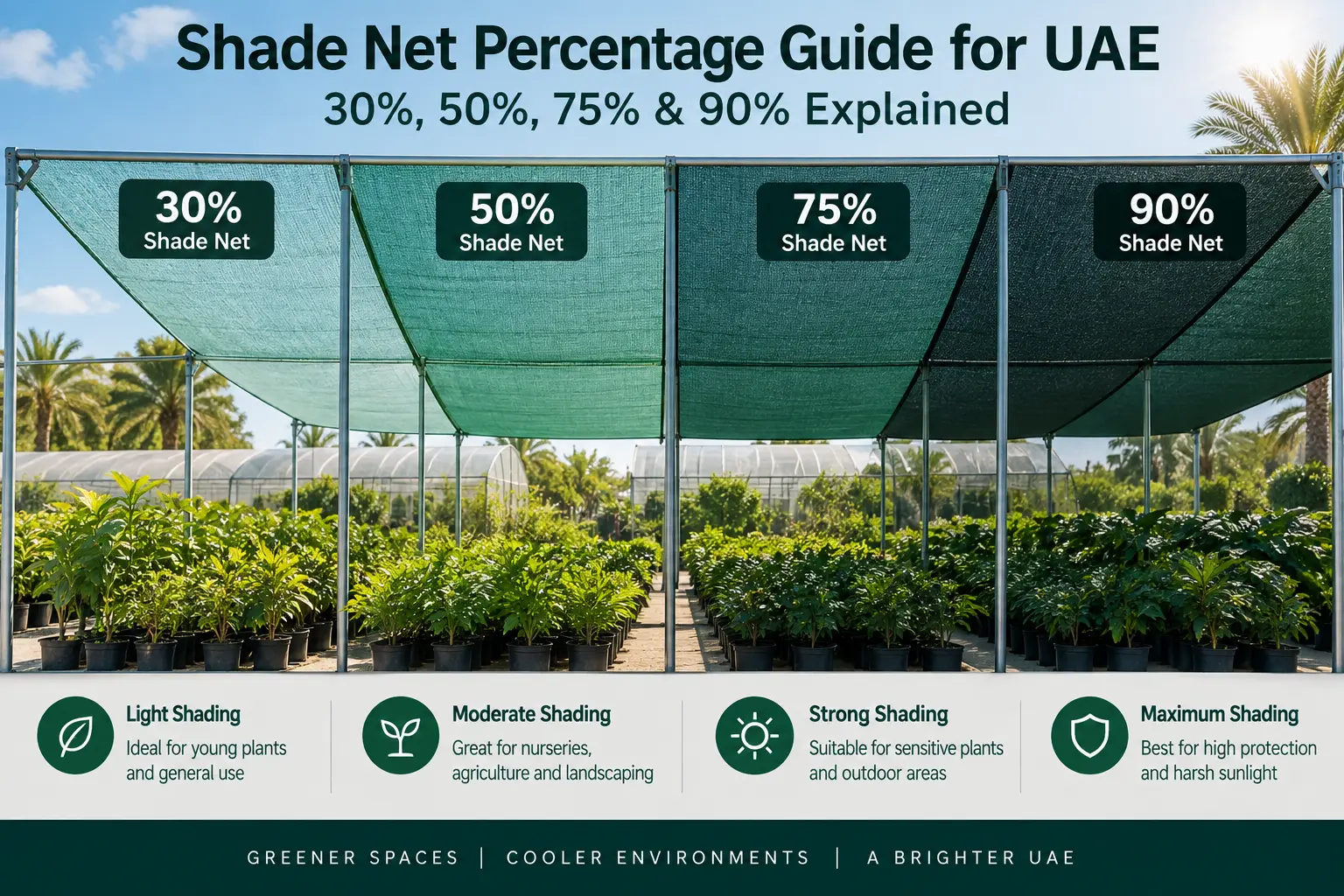
- 30% shade net → allows relatively high sunlight penetration
- 50% shade net → provides moderate shading
- 75% shade net → provides strong shading
- 90% shade net → provides very dense shading
A higher percentage generally means greater light reduction, but that does not automatically make it the best choice.
Plants, crops, people, vehicles, and construction materials have different protection requirements. Therefore, selecting a shade net should be based on the intended application rather than simply choosing the highest percentage available.
30% Shade Net – Light Shading
A 30% shade net is suitable when the application requires some reduction in direct sunlight while still allowing substantial light and airflow through the fabric.
This type of shade net can be useful for applications where complete or heavy shading is unnecessary.
Common Applications
- Light agricultural shading
- Young plants that still require substantial sunlight
- Landscaping
- Garden areas
- Nurseries
- Temporary outdoor shading
- General-purpose sun protection
The relatively open structure also allows good airflow, which can be beneficial in outdoor environments.
When Should You Choose 30% Shade Net?
Choose a 30% shade net when you want to reduce direct sunlight without creating a heavily shaded environment.
For example, if an outdoor area needs some protection from intense sunlight but still requires plenty of natural light, a lower shade percentage may be more appropriate.
50% Shade Net – Balanced Sun Protection
50% shade net is one of the most versatile options because it provides a balance between sunlight reduction, ventilation, and natural light.
It can be used across a variety of commercial, agricultural, and landscaping applications.
Common Applications
- Nurseries
- Gardens
- Agriculture
- Landscaping
- Greenhouse applications
- Outdoor work areas
- Plant protection
- Temporary shade structures
For many general-purpose applications, 50% shading can provide a practical middle ground between light and heavy shade.
Why Choose 50%?
A 50% shade net can help reduce direct solar exposure while maintaining airflow and some natural light. This makes it useful where complete shading is unnecessary or undesirable.
75% Shade Net – Strong Sun Protection
A 75% shade net provides significantly more shading than 30% or 50% options. It is suitable for applications where stronger protection from direct sunlight is required.
In the UAE, where outdoor areas can experience intense solar exposure, higher shade percentages can be useful for specific applications.
Common Applications
- Outdoor seating areas
- Nurseries requiring stronger shading
- Sensitive plants
- Landscaping projects
- Construction areas
- Temporary outdoor shelters
- Equipment protection
- Commercial outdoor spaces
However, before selecting 75% shading for plants, it is important to understand the light requirements of the specific crop or plant species.
90% Shade Net – Maximum Shade Environment
A 90% shade net provides very dense shading and significantly limits direct sunlight reaching the area underneath.
This option is generally selected when maximum shade is more important than maintaining high levels of natural light.
Common Applications
- Strong sun protection areas
- Outdoor waiting areas
- Temporary shelters
- Sensitive equipment
- Certain nursery applications
- Construction protection
- Commercial shade structures
Because 90% shade substantially reduces sunlight, it should not automatically be selected for agricultural applications. Plants that require significant sunlight may perform poorly under excessive shading.
Shade Net Percentage Comparison
| Shade Percentage | Shading Level | Typical Applications |
| 30% | Light | Gardens, landscaping, light agricultural use |
| 50% | Moderate | Nurseries, agriculture, greenhouse applications |
| 75% | Heavy | Sensitive plants, outdoor areas, construction |
| 90% | Very Heavy | Maximum shade areas, shelters, selected nursery applications |
The best option depends on the specific requirements of the project.
Choosing the Right Shade Net for UAE Conditions
When selecting shade netting in the UAE, percentage is only one factor to consider.
You should also evaluate:
1. Application
First determine what you are trying to protect.
A shade net for plants may require a different specification from a shade net used over a construction site or outdoor seating area.
2. Sunlight Requirements
Consider how much sunlight needs to reach the protected area.
Plants requiring substantial sunlight may benefit from lower shade percentages, while sensitive plants or people-facing outdoor areas may require stronger shading.
3. Airflow
Ventilation is particularly important in hot climates. A suitable shade net should reduce excessive solar exposure without unnecessarily restricting airflow.
4. Installation Location
Consider whether the shade net will be installed:
- Over a garden
- Around a nursery
- Across a greenhouse
- At a construction site
- Around an outdoor working area
- As part of a temporary shade structure
The installation environment can influence the required material and shade percentage.
5. Material Quality
Shade percentage alone does not determine product quality. The fabric should also be durable and suitable for outdoor exposure.
For long-term UAE applications, factors such as UV stabilization, fabric strength, construction quality, and resistance to environmental conditions should be considered.
What Shade Percentage Is Best for Plants?
There is no universal shade percentage that is suitable for every plant.
Different plants and crops have different light requirements. Therefore, the appropriate shade level should be selected according to the specific plants being grown.
As a general starting point:
- 30% – suitable where plants require relatively high light levels
- 50% – suitable for many general nursery and landscaping applications
- 75% – useful for plants or areas requiring stronger shade
- 90% – appropriate only for applications where very heavy shading is required
Before installing a shade net over a crop or nursery, consider the plant’s sunlight requirements and growing conditions.
Why Shade Net Quality Matters in the UAE
The UAE climate can be demanding for outdoor fabrics. Prolonged exposure to sunlight, high temperatures, dust, and wind can gradually affect lower-quality materials.
A quality shade net should therefore be selected based on more than its percentage rating.
Look for:
- UV-stabilized material
- Strong HDPE fabric
- Consistent shade performance
- Suitable fabric density
- Good tear resistance
- Proper edge finishing
- Appropriate installation accessories
- Long-term outdoor suitability
Choosing a reliable shade net supplier in Dubai can help ensure that the product specification matches the intended application.
30% vs 50% vs 75% vs 90% Shade Net
The simplest way to understand the differences is to consider how much shade your application actually needs.
Choose 30% when:
You need light shading and want to maintain relatively high levels of sunlight and airflow.
Choose 50% when:
You need balanced protection for general agricultural, nursery, landscaping, or outdoor applications.
Choose 75% when:
You require stronger protection from direct sunlight and the application can tolerate lower light levels.
Choose 90% when:
You need very dense shading and maximum reduction of direct sunlight is the primary objective.
Common Mistakes When Choosing Shade Net Percentage
Choosing the Highest Percentage Automatically
A higher shade percentage is not always better. Excessive shading can reduce the amount of sunlight available to plants and may not be appropriate for every application.
Ignoring UV Resistance
A shade net installed outdoors needs to withstand prolonged exposure to sunlight. Always consider UV stabilization when choosing material for long-term use.
Selecting Based Only on Price
The cheapest option may not provide the durability required for continuous outdoor exposure. Consider material quality, expected service life, and application requirements.
Not Considering Installation Conditions
Wind exposure, mounting method, dimensions, and tension can affect the performance and longevity of a shade net.
Using the Same Shade Percentage Everywhere
A nursery, construction site, garden, and outdoor seating area may have completely different requirements. Select the shade percentage according to the purpose.
Shade Net for Agriculture, Construction & Commercial Applications
Shade nets are used across several industries in the UAE.
Agriculture
Shade nets can help manage direct sunlight and create a more controlled environment for selected crops and plants.
Nurseries
Nurseries can use different shade percentages depending on the light requirements of the plants being cultivated.
Construction
Shade netting can be used around construction areas for temporary shading, site protection, and reducing direct exposure to harsh outdoor conditions.
Landscaping
Gardens, landscaped areas, and outdoor plant installations may use shade nets to reduce excessive sunlight.
Commercial Outdoor Areas
Businesses can use shade netting for outdoor workspaces, temporary shelters, seating areas, and other applications where reduced solar exposure is required.
For larger projects, choosing the appropriate material and shade percentage together is essential for achieving reliable performance.
How HP Tarp Can Help
Selecting the right shade percentage becomes easier when you have access to different material options and professional guidance.
HP Tarp provides shade net solutions for agricultural, commercial, construction, landscaping, and other outdoor applications across the UAE.
Our range can be selected according to the required shading level, application, dimensions, and installation requirements.
For businesses looking for wholesale shade net suppliers in UAE, choosing a supplier that understands different project requirements can help ensure the right combination of material, shade percentage, and durability.
Conclusion
Choosing the right shade net percentage depends on the amount of sunlight reduction your application requires. While 30% provides light shading, 50% offers a balanced solution, 75% provides stronger protection, and 90% creates a highly shaded environment.
However, shade percentage should not be considered in isolation. Material quality, UV resistance, application, airflow, installation conditions, and expected service life are equally important.
For UAE conditions, selecting a durable shade net designed for outdoor exposure can provide better long-term performance and protection.
Whether you need shade netting for agriculture, nurseries, construction, landscaping, or commercial outdoor areas, selecting the right percentage is the first step toward an effective shading solution.
Frequently Asked Questions
Q1. What does shade net percentage mean?
Ans – Shade net percentage indicates how much sunlight the fabric is designed to block or reduce. A 30% shade net provides light shading, while 50%, 75%, and 90% options provide progressively stronger levels of shade.
Q2. Is 50% shade net good for plants?
Ans – Yes, a 50% shade net can be suitable for many nursery, landscaping, and agricultural applications. However, the ideal shade percentage depends on the specific plant or crop and its sunlight requirements.
Q3. What is the difference between 75% and 90% shade net?
Ans – A 90% shade net provides denser shading than a 75% shade net and allows less direct sunlight to pass through. A 75% shade net is generally more suitable when strong shading is required while retaining more natural light.
Q4. Which shade net is best for the UAE?
Ans – There is no single shade percentage that is best for every UAE application. 30%, 50%, 75%, and 90% shade nets can all be suitable depending on the intended use, sunlight requirements, ventilation needs, and installation environment.
Q5. Is shade net UV resistant?
Ans – Quality outdoor shade nets are commonly manufactured using UV-stabilized materials to improve their durability under prolonged sunlight exposure. The actual UV resistance depends on the material specification and product quality.
Q6. Which shade net percentage is best for agriculture?
Ans – The appropriate percentage depends on the crop and its sunlight requirements. In general, 30% to 50% shade nets can be suitable for applications requiring moderate sunlight, while crops or plants that need stronger protection may require higher shade percentages.
Q7. Can shade nets be used for construction sites?
Ans – Yes. Shade nets can be used around construction areas for temporary shading and outdoor protection. The appropriate material and shade percentage depend on the project’s requirements and installation conditions.
Q8. How do I choose the right shade net percentage?
Ans – Consider the application, required sunlight reduction, plant or crop requirements, airflow, installation location, and expected duration of use. For long-term outdoor applications in the UAE, also consider UV stabilization and overall fabric durability.