

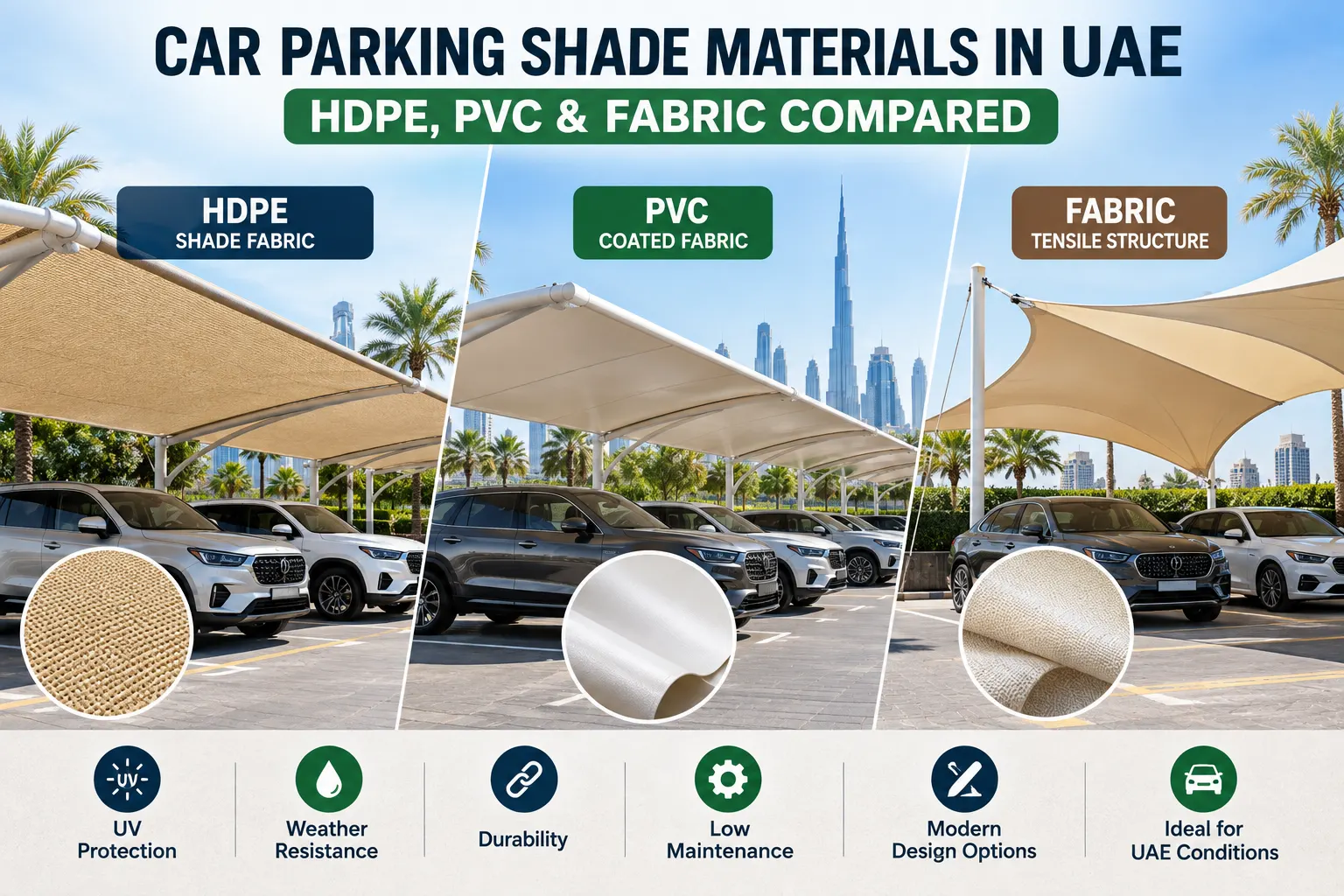
Choosing the right material is one of the most important decisions when installing a car parking shade in the UAE. The material affects durability, UV protection, appearance, maintenance, water resistance, and the overall suitability of the shade for residential, commercial, and industrial parking areas.
Different parking shade projects may require different materials. HDPE, PVC-coated fabric, and architectural or tensile fabrics are commonly considered for outdoor shade structures, with each offering different characteristics.
In the UAE, the material also needs to cope with strong sunlight, high temperatures, dust, and outdoor exposure. Therefore, selecting a parking shade material based only on appearance or initial cost may not provide the best long-term solution.
This guide compares HDPE, PVC, and fabric car parking shade materials and explains what to consider before choosing a material for your parking area.
What Materials Are Used for Car Parking Shades in UAE?
Car parking shades generally consist of two main components:
- A supporting structure, usually made from steel or another suitable structural material
- A shade membrane or covering material installed over the structure
The covering material provides shade and protection for parked vehicles, while the structure supports the membrane and transfers loads to the foundation.
Three commonly considered material categories are:
- HDPE shade fabric
- PVC-coated fabric
- Architectural or tensile fabric
The right choice depends on the project requirements, including the size of the parking area, desired appearance, level of weather exposure, water-resistance requirements, and expected maintenance.
HDPE Car Parking Shade Material
HDPE, or high-density polyethylene, is widely used for outdoor shade applications. HDPE shade fabric is typically manufactured as a knitted mesh that allows some air to pass through while reducing direct sunlight.
For car parking areas, HDPE can provide an effective combination of shade, ventilation, flexibility, and outdoor durability.
Key Features of HDPE Parking Shades
UV protection:
Quality HDPE shade fabric is designed for outdoor applications and can provide protection from direct sunlight. UV stabilization is an important consideration when selecting material for long-term use.
Breathable construction:
The mesh structure allows airflow through the fabric. This can be useful in outdoor parking areas where ventilation is important.
Lightweight:
HDPE shade fabric is relatively lightweight compared with heavier coated fabrics. This can influence the structural requirements of the parking shade.
Flexible design options:
HDPE can be used for different shade structures, including cantilever, tensile-style, and other custom parking shade designs.
Suitable for outdoor environments:
HDPE shade fabric is commonly used for outdoor shade applications where reducing direct solar exposure is the primary objective.
Where Is HDPE Suitable?
HDPE parking shade material can be considered for:
- Residential parking areas
- Villa parking
- School parking
- Staff parking
- Commercial car parks
- Community parking areas
- Recreational facilities
- Outdoor vehicle areas
If the primary objective is sun protection and ventilation, HDPE can be a practical material to consider.
PVC Car Parking Shade Material
PVC-coated fabric is another option for parking shade structures. PVC fabric consists of a textile base coated with polyvinyl chloride, creating a more substantial membrane than an open knitted mesh.
PVC-coated materials can offer useful characteristics where the project requires a more robust membrane, specific appearance, or greater resistance to water penetration.
Key Features of PVC Parking Shade Material
Water resistance:
PVC-coated fabrics can be designed for applications where water resistance is important. The exact performance depends on the fabric specification, coating, seams, and installation.
Durability:
Heavy-duty PVC-coated fabrics are commonly used for demanding outdoor applications and can be selected according to project requirements.
Custom fabrication:
PVC-coated fabric can be fabricated into different shapes and sizes, making it suitable for custom parking structures.
Reduced light transmission:
Depending on the fabric specification, PVC membranes can provide substantial reduction of direct sunlight.
Professional appearance:
PVC-coated fabrics can be used to create clean, modern parking shade structures suitable for commercial and architectural applications.
Where Is PVC Suitable?
PVC parking shade materials can be considered for:
- Commercial parking facilities
- Shopping centres
- Hotels
- Office buildings
- Residential developments
- Industrial facilities
- Large parking areas
- Custom architectural shade structures
For projects where water resistance, robust construction, and a more solid membrane are important considerations, PVC-coated fabric may be appropriate.
Fabric Car Parking Shade Material
The term “fabric parking shade” can refer to several different textile-based materials used in tensile and architectural structures.
These fabrics are selected according to their intended application, required strength, UV performance, appearance, and environmental exposure.
Fabric structures are particularly useful when the design of the parking shade is an important part of the project.
Key Features of Fabric Parking Shades
Architectural flexibility:
Fabric can be shaped into curved, tensioned, and contemporary structures that create distinctive parking areas.
Custom designs:
Tensile structures can be engineered in different configurations depending on the available space and structural requirements.
Visual appeal:
Fabric parking shades can provide a modern appearance and can be designed to complement commercial or residential properties.
Large-span applications:
Certain engineered fabric systems can be used for larger structures where open parking areas need extensive coverage.
Material-specific performance:
Fabric performance varies considerably depending on the type of membrane, coating, manufacturing specification, and installation method.
Therefore, “fabric” should not be treated as one single material. The technical specification should be checked before selecting a fabric parking shade.
HDPE vs PVC vs Fabric Parking Shades
The three options have different characteristics and can suit different project requirements.
| Feature | HDPE | PVC-Coated Fabric | Architectural Fabric |
| Structure | Knitted mesh | Coated membrane | Engineered textile membrane |
| Sun protection | Excellent for shade applications | Excellent | Excellent |
| Airflow | High | Lower than open mesh | Depends on design/material |
| Water resistance | Limited by open mesh construction | Generally high | Depends on membrane |
| Design flexibility | High | High | Very high |
| Custom shapes | Yes | Yes | Yes |
| Typical use | Outdoor shade | Heavy-duty/custom structures | Architectural/tensile structures |
| Maintenance | Generally straightforward | Requires fabric and seam inspection | Requires periodic inspection |
| Appearance | Functional and versatile | Clean and solid | Architectural |
| Best suited for | Sun protection and ventilation | Robust, custom and weather-resistant applications | Premium architectural designs |
The comparison should always be made using the actual technical specifications of the proposed material, rather than simply comparing material names.
Which Parking Shade Material Is Best for UAE Conditions?
There is no single material that is suitable for every parking project in the UAE.
The right option depends on what the parking shade needs to achieve.
For Maximum Airflow
HDPE mesh can be considered when ventilation is a major requirement. Its open construction allows air to move through the shade while reducing direct sunlight.
For Water Resistance
PVC-coated fabric may be more appropriate where the parking structure requires a more water-resistant membrane.
For Architectural Designs
Engineered fabric structures can be considered when the appearance and shape of the parking shade are major design considerations.
For Large Commercial Projects
Commercial projects may require a combination of structural engineering, material specifications, drainage considerations, installation requirements, and long-term maintenance planning.
The material should therefore be selected based on the complete parking shade system, rather than the fabric alone.
How to Choose the Right Car Parking Shade Material
Before selecting a material, consider the following factors.
1. Level of Sun Exposure
Parking shades in the UAE are exposed to strong sunlight for extended periods. Look for materials designed for outdoor use with appropriate UV resistance and stabilization.
The manufacturer’s technical specifications should be reviewed to understand the expected performance of the material.
2. Required Water Resistance
Ask whether the parking area needs protection from rain in addition to sunlight.
An open HDPE mesh and a waterproof membrane serve different purposes. If water resistance is important, a suitable coated fabric and properly designed structure may be required.
3. Airflow Requirements
Open mesh materials allow significant airflow through the shade.
This can be useful in outdoor parking areas, particularly where ventilation is preferred over creating a fully enclosed covering.
4. Parking Shade Design
The shape of the structure also influences material selection.
Common parking shade designs include:
- Cantilever shades
- Tensile structures
- Pyramid shades
- Wave-style shades
- Sail-style structures
- Double-sided parking shades
- Custom architectural designs
The selected material should be compatible with the proposed structural design.
5. Parking Area Size
A small residential parking space and a large commercial car park may have very different requirements.
For larger projects, factors such as structural spans, membrane tension, drainage, foundations, wind loading, and installation access should be considered during the design stage.
6. Maintenance Requirements
Every outdoor shade structure requires periodic inspection.
Check the fabric or membrane for:
- Tears
- Loose sections
- Damaged edges
- Fixing problems
- Excessive dirt accumulation
- Signs of material deterioration
The supporting structure should also be inspected for corrosion, damaged coatings, loose connections, and other visible issues.
7. Appearance
For residential and commercial projects, the visual appearance of the shade may be just as important as its functional performance.
Material colour, shape, tension, structure design, and overall finishing can influence the appearance of the completed parking area.
Residential vs Commercial Parking Shade Materials
Material selection can also differ according to the type of property.
Residential Parking Shades
For villas and residential properties, homeowners may prioritize:
- Effective sun protection
- Attractive appearance
- Low maintenance
- Suitable airflow
- Custom dimensions
- Compatibility with the existing property
HDPE and fabric-based designs can both be considered depending on the required design and performance.
Commercial Parking Shades
Commercial properties may require:
- Larger coverage areas
- Consistent appearance
- Higher usage durability
- Custom structural designs
- Long-term outdoor performance
- Professional installation
- Maintenance planning
Projects such as hotels, offices, retail properties, schools, and commercial developments may therefore require a more detailed material and structural assessment.
Why Material Quality Matters for Parking Shades
Choosing between HDPE, PVC, and fabric is only one part of the process.
Two materials belonging to the same category can have significantly different specifications.
For example, important considerations can include:
- Fabric weight
- Tensile strength
- UV stabilization
- Coating specification
- Tear resistance
- Seam construction
- Edge reinforcement
- Colour stability
- Expected outdoor exposure
- Manufacturer specifications
For this reason, buyers should request technical information about the proposed material instead of selecting a parking shade based only on a material name.
Why Professional Installation Matters
Even high-quality material can perform poorly if the parking shade is not designed and installed correctly.
Professional installation helps ensure that:
- The fabric is properly tensioned
- Fixing points are correctly positioned
- Edges are adequately reinforced
- The supporting structure is suitable
- Drainage is considered where required
- The structure is securely anchored
- The finished shade provides the intended coverage
For larger parking projects, the structural design should also account for the site conditions and applicable engineering requirements.
HDPE, PVC or Fabric: What Should You Choose?
The choice ultimately depends on the requirements of your parking area.
Choose HDPE when:
You primarily need effective shade, airflow, and a lightweight outdoor mesh solution.
Consider PVC-coated fabric when:
You require a more substantial membrane with water-resistant characteristics and custom fabrication options.
Consider architectural fabric when:
Design flexibility, large-span coverage, and a contemporary appearance are important parts of the project.
There is no universal material for every car park. The best selection is the one that matches the site conditions, design, required protection, maintenance expectations, and project budget.
Car Parking Shade Solutions in UAE
For projects requiring professionally planned outdoor vehicle protection, HP Tarp provides car parking shade solutions in UAE designed around different site and application requirements.
Material selection can be discussed according to the required coverage, structure type, outdoor exposure, appearance, and intended use.
You can also explore sun shade solutions for outdoor areas when the project involves other outdoor shading requirements:
For projects involving PVC-based protective materials, you can also review the available PVC tarpaulin materials
Conclusion
Selecting the right car parking shade material in UAE requires more than comparing prices.
HDPE, PVC-coated fabric, and architectural fabric each have different characteristics. HDPE is commonly considered for breathable outdoor shade applications, PVC-coated fabric can provide a more substantial and water-resistant membrane, while engineered fabric systems offer extensive design flexibility for architectural structures.
Before making a decision, consider sunlight exposure, airflow, water resistance, structure design, parking area size, maintenance, material specifications, and installation requirements.
A properly selected and professionally installed parking shade can provide reliable outdoor coverage while complementing the appearance and function of the property.
Frequently Asked Questions
Q1. What is the best material for car parking shades in UAE?
Ans – The appropriate material depends on the project requirements. HDPE can be suitable for breathable shade applications, while PVC-coated and architectural fabrics may be considered for projects requiring different levels of water resistance, durability, or design flexibility.
Q2. Is HDPE good for car parking shades?
Ans – Yes. HDPE shade fabric is commonly used for outdoor shade applications because its knitted mesh construction provides shade while allowing airflow. UV stabilization and material quality should be checked before selection.
Q3. Is PVC suitable for outdoor parking shades?
Ans – PVC-coated fabric can be suitable for outdoor parking shade structures. It can provide a more substantial membrane and water-resistant characteristics, depending on the specific fabric and construction.
Q4. What is the difference between HDPE and PVC parking shades?
Ans – HDPE is generally an open knitted mesh that prioritizes shade and airflow, while PVC-coated fabric is a coated membrane that can provide greater water resistance and a more solid covering.
Q5. Are fabric parking shades waterproof?
Ans – Not all fabric parking shades are waterproof. Performance depends on the specific membrane, coating, seams, design, and installation. If waterproofing is required, the proposed fabric specification should be confirmed before installation.
Q6. Which parking shade material provides UV protection?
Ans – HDPE, PVC-coated fabric, and architectural fabrics can all be manufactured for outdoor applications with UV-resistant or UV-stabilized properties. The actual level of UV performance depends on the material specification and manufacturer.
Q7. How long do car parking shade materials last?
Ans – Service life varies according to material quality, UV exposure, installation, weather conditions, maintenance, and usage. A supplier should provide the relevant material specifications and expected service information for the selected product.
Q8. How do I choose the right parking shade material?
Ans – Consider the level of sun exposure, required water resistance, airflow, shade design, parking area size, appearance, maintenance requirements, and project budget. Professional assessment can help match the material to the site and structure.